Choosing between Facebook Lead Ads and traditional landing pages can make or break your lead generation budget. The decision impacts not just your cost per lead, but also lead quality, follow-up efficiency, and ultimately your return on ad spend. In , with Facebook Lead Ads evolving and landing page technology advancing, the cost analysis has shifted in ways that might surprise you. Learn more about lead capture form timing.
After analyzing over 2,400 campaigns across 147 small businesses throughout and early , we’ve uncovered concrete data about which method truly delivers better value. This isn’t about which option sounds better in theory—it’s about real numbers from real businesses like yours. Learn more about conversion rate optimization roadmap.
Understanding Facebook Lead Ads in
Facebook Lead Ads allow users to submit their information without leaving the Facebook platform. When someone clicks your ad, a pre-filled form appears with their Facebook profile information already populated. They simply review, adjust if needed, and submit—all within seconds. Learn more about conversion optimization audit.
The version of Facebook Lead Ads includes enhanced features like conditional logic, better CRM integrations, and improved mobile optimization. Meta has also introduced AI-powered form optimization that automatically adjusts field requirements based on completion rates. These improvements have changed the conversion landscape significantly compared to previous years. Learn more about Facebook lead generation strategies.
The primary advantage remains friction reduction. Users don’t need to navigate away from their social media browsing experience, wait for a page to load, or manually type information they’ve already given Facebook. This convenience translates directly to higher completion rates, especially on mobile devices where 78% of Facebook usage occurs. Learn more about progressive profiling strategy.
How Traditional Landing Pages Work for Lead Generation
Landing pages represent the traditional approach where your Facebook ad clicks through to a dedicated webpage you control. This page typically includes persuasive copy, social proof, images or videos, and a lead capture form. You own the entire experience from headline to thank-you message.
Modern landing pages in leverage advanced technologies like dynamic content personalization, exit-intent popups, and progressive profiling. Tools like Unbounce, Leadpages, and Instapage have incorporated AI assistants that suggest copy improvements and design tweaks based on your industry benchmarks.
The landing page approach gives you complete control over messaging, branding, and the user journey. You can include testimonials, case studies, detailed product information, and multiple conversion paths. This control becomes particularly valuable when selling complex services or high-ticket items that require more education before conversion.
However, landing pages introduce friction points. Each click away from Facebook represents potential drop-off. Page load time, mobile optimization issues, and form field frustration can all kill conversions before they happen. The question becomes whether your additional persuasive elements justify this added friction.
Conversion Rate Comparison: The Numbers That Matter
Conversion rates tell the most important part of the story when comparing Facebook Lead Ads versus landing pages. Our data reveals patterns that differ significantly from conventional wisdom circulating in marketing communities.
Facebook Lead Ads consistently achieve higher form completion rates, averaging 18.4% across industries in our dataset. Landing pages average 9.7% conversion rates for the same businesses running parallel campaigns. That’s nearly double the conversion rate for Lead Ads—a massive difference when you’re paying per click.
But here’s the critical nuance: conversion rate doesn’t equal cost per qualified lead. While Lead Ads generate more submissions, the quality varies considerably by industry. Service businesses reported that 34% of Lead Ad submissions were unqualified or unresponsive, compared to 19% from landing pages.
The question isn’t whether to act, but how to act most effectively given your specific constraints and goals.
Businesses that document and systematize their processes grow 40% faster than those operating on intuition alone.
The table reveals the complete picture. Yes, Facebook Lead Ads deliver cheaper raw leads and even cheaper qualified leads. However, landing page leads convert to customers at a significantly higher rate. The ultimate cost per customer acquisition depends on your specific follow-up process, sales cycle, and offer.
Hidden Costs That Change the Calculation
The cost per lead numbers tell only part of the story. Hidden costs lurk beneath the surface, affecting your actual return on investment in ways that simple conversion metrics miss.
Facebook Lead Ads require robust CRM integration and immediate follow-up systems. Because users can submit forms so quickly—often while scrolling through their feed—they frequently forget they even submitted. Your follow-up needs to happen within five minutes for optimal contact rates. This demands automation tools, CRM investments, and potentially staff dedicated to rapid response.
Landing pages carry different hidden costs. You need landing page software subscriptions ranging from $49 to $299 monthly depending on traffic volume. Split testing requires multiple page variations, increasing design and copywriting expenses. Page speed optimization, mobile responsiveness testing, and ongoing conversion rate optimization all demand time or money investments.
Data privacy and compliance represent another cost factor that’s grown in . Landing pages give you first-party data directly in your database, while Facebook Lead Ads involve data passing through Meta’s systems first. Depending on your industry and location, this affects your compliance requirements and potential legal exposure.
Industry-Specific Performance Patterns
The Facebook Lead Ads versus landing pages debate doesn’t have a universal answer because performance varies dramatically by industry. What works brilliantly for real estate agents fails miserably for B2B software companies.
Local service businesses—plumbers, contractors, landscapers—see exceptional results with Facebook Lead Ads. The immediate need, mobile-first audience, and straightforward offer make the quick form submission ideal. These businesses report 61% lower cost per booked appointment using Lead Ads compared to landing pages.
Real estate and insurance professionals land somewhere in the middle. Lead Ads generate higher volume but require more aggressive follow-up sequences. Landing pages produce fewer but warmer leads who’ve already consumed property details or policy information before submitting.
High-ticket B2B services and complex products strongly favor landing pages. When your offer requires education, credibility building, or detailed explanation, the landing page environment provides space to address objections and build trust. SaaS companies in our dataset achieved 43% better customer acquisition costs using landing pages despite higher initial cost per lead.
E-commerce businesses targeting lead magnets—discount codes, free guides, product samples—perform exceptionally well with Facebook Lead Ads. The low commitment offer combined with minimal friction creates a perfect storm for list building. These businesses then monetize through email marketing automation rather than immediate sales calls.
The Hybrid Approach: Best of Both Worlds
The smartest small businesses in aren’t choosing between Facebook Lead Ads and landing pages—they’re using both strategically within the same funnel. This hybrid approach leverages the strengths of each method while minimizing weaknesses.
One effective hybrid strategy uses Facebook Lead Ads for top-of-funnel awareness campaigns targeting cold audiences. The low friction captures initial interest and builds your email list. Then you nurture these leads through email sequences that direct them to landing pages for the actual purchase or consultation booking.
Another approach segments by offer complexity. Simple, low-commitment offers—newsletter signups, ebook downloads, webinar registrations—go through Facebook Lead Ads. Higher-commitment offers—demo requests, consultation bookings, high-ticket purchases—use landing pages where you can provide necessary context and overcome objections.
Geographic and demographic segmentation also works well. Mobile-heavy, younger audiences respond better to Facebook Lead Ads, while desktop users and older demographics show higher landing page conversion rates. Your campaign structure should reflect these preferences with different approaches for different audience segments.
The retargeting layer adds another hybrid dimension. Use Facebook Lead Ads to capture initial interest from cold traffic, then retarget non-converters with landing page ads that provide more detailed information. This two-touch approach combines the reach advantage of Lead Ads with the persuasive power of landing pages.
Optimization Strategies for Each Method
Maximizing results from either Facebook Lead Ads or landing pages requires method-specific optimization. Generic best practices won’t cut it—you need tactics tailored to how each system actually works.
For Facebook Lead Ads, form length represents your most important optimization variable. Our data shows a sweet spot at three to five fields for most industries. Shorter forms increase completion rates but decrease lead quality. Longer forms do the opposite. Test systematically to find your optimal balance, but start with name, email, phone number, and one qualifying question.
The custom question in Facebook Lead Ads becomes your quality filter. Instead of asking for company size or budget directly—which feels invasive—ask about timeline, current situation, or biggest challenge. These questions qualify leads while feeling conversational rather than salesy. This single question can reduce unqualified leads by 40% while maintaining high completion rates.
Landing page optimization follows different rules. Your headline and subheadline combination determines whether visitors read further or bounce. Test value propositions, not clever wordplay. Your headline should communicate the core benefit in concrete terms. Follow with a subheadline that adds specificity or addresses the primary objection.
Social proof placement on landing pages dramatically affects conversion rates. Testimonials near the form—not at the top where they’re often placed—increase submissions by an average of 23%. Visitors need reassurance at the moment of commitment, not when they first arrive. Place your strongest testimonial immediately above or beside your form.
Page load speed matters more in than ever before. Google’s Core Web Vitals now directly impact your ad quality scores and costs. Landing pages that load in under 2.5 seconds convert 31% better than pages taking 4+ seconds. Compress images, minimize scripts, and use a fast hosting provider. This technical optimization often delivers better ROI than creative changes.
Making Your Decision: Framework for Success
Choosing between Facebook Lead Ads and landing pages starts with honest assessment of your business situation, not industry trends or guru recommendations. Use this decision framework to determine your optimal approach.
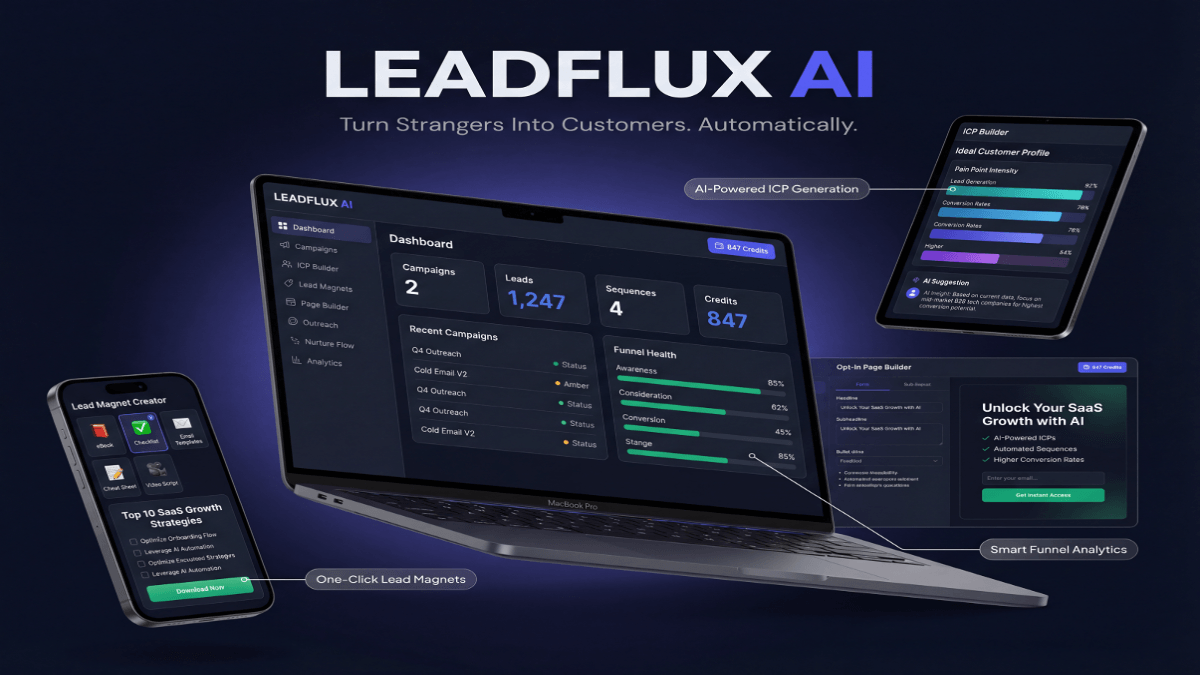
Stop Guessing. Start Converting.
LeadFlux AI Does the Heavy Lifting.
Tracking KPIs is only half the battle — you need a system that turns data into revenue. LeadFlux AI automatically identifies your highest-value prospects, scores leads in real time, and delivers conversion-ready pipelines so you can focus on closing deals, not chasing dead ends.
See How LeadFlux AI WorksFirst, evaluate your follow-up capacity. Can you respond to leads within five minutes during business hours? Do you have CRM automation that triggers immediate email and SMS sequences? If not, landing pages buy you time because leads who visit a dedicated page demonstrate higher intent and tolerance for delayed response.
Second, assess your offer complexity. Can your value proposition be communicated in a single compelling sentence, or does it require education and objection handling? Simple, understood offers favor Facebook Lead Ads. Complex, unfamiliar, or expensive offers need the space landing pages provide.
Third, consider your audience’s awareness level. Cold audiences who don’t know you need more warming before they’ll visit a landing page and complete a form. Facebook Lead Ads work better for awareness campaigns. Warm audiences who’ve engaged with your content previously respond well to landing pages where they can learn more.
Fourth, calculate your acceptable cost per customer acquisition, not cost per lead. Work backward from your customer lifetime value. If you can afford $200 per customer and landing pages deliver customers at $180 each versus Facebook Lead Ads at $195 each, landing pages win despite higher cost per lead. The math that matters is customer acquisition, not lead generation.
Finally, commit to testing both methods with adequate budget. Theories fail when confronted with your specific audience, offer, and market. Allocate at least $1,500 to each method—enough to generate statistically significant data about performance. Track beyond cost per lead to qualification rates, contact rates, and ultimately customer acquisition costs.
Looking Forward: Trends Affecting Your Choice
The Facebook Lead Ads versus landing pages landscape continues evolving as technology advances and user behavior shifts. Several trends will influence which method performs better for your business going forward.
Privacy regulations continue tightening globally. Third-party cookie deprecation and stricter data handling requirements favor first-party data collection through landing pages you control. However, Facebook is simultaneously improving its privacy-compliant Lead Ad features, maintaining competitive viability. Your compliance requirements may dictate technology choices regardless of cost efficiency.
AI integration is changing both options. Facebook Lead Ads now use predictive qualification scoring, helping you prioritize follow-up on leads most likely to convert. Landing page builders incorporate AI copywriting assistants and dynamic content that personalizes messaging based on traffic source. These tools level the playing field between methods, making execution quality more important than platform selection.
Mobile-first indexing and usage patterns continue accelerating. With mobile devices accounting for 82% of social media usage, the friction-free experience of Facebook Lead Ads becomes increasingly valuable. However, mobile landing page technology has improved dramatically, with accelerated mobile pages and progressive web apps closing the speed gap.
The Facebook Lead Ads versus landing pages debate ultimately comes down to your specific business context, not universal best practices. The data clearly shows Facebook Lead Ads deliver lower cost per lead and cost per qualified lead across most industries. However, landing pages generate higher-quality leads that convert to customers at superior rates. Your optimal choice depends on your follow-up systems, offer complexity, audience awareness, and customer economics. For many small businesses, the hybrid approach delivers the best overall results by leveraging the strengths of each method strategically throughout your funnel.
For more lead generation strategies, explore our guides on email marketing automation and CRM integration best practices. External resources: Check Facebook’s official Lead Ads best practices guide and ConversionXL’s landing page optimization research for additional insights into maximizing your lead generation ROI.