Exit intent technology has transformed how digital marketers recover abandoning website visitors. When properly implemented, exit intent popups can convert 12% or more of visitors who would otherwise leave your site forever. This conversion recovery tool detects when a user is about to close their browser tab or navigate away, triggering a targeted message at precisely the right moment. The difference between an annoying popup and a conversion machine lies in strategic implementation, compelling messaging, and understanding visitor psychology at the moment of exit. Learn more about exit-intent popup testing variations.
Understanding Exit Intent Technology and Visitor Behavior
Exit intent detection works by tracking mouse movements and cursor velocity toward browser controls. When a visitor moves their cursor rapidly toward the top of the browser window to close the tab or type a new URL, the technology triggers your popup overlay. This precision timing matters because it catches visitors at a critical decision point without interrupting their browsing experience earlier in their session. Learn more about exit-intent popup triggers.
The psychology behind exit intent effectiveness centers on loss aversion and timing. Visitors who are already leaving have nothing to lose by viewing one more offer, making them paradoxically more receptive than engaged browsers. Your popup represents a final opportunity to deliver value, address objections, or present an alternative path forward that matches their hesitation. Learn more about high-converting popup offers.
Modern exit intent systems can detect different abandonment triggers on desktop versus mobile devices. Desktop users typically show exit intent through cursor movement patterns, while mobile detection relies on back-button behavior, scrolling patterns, and time-on-page metrics. Implementing device-specific strategies ensures your conversion recovery works across all traffic sources without creating user experience problems. Learn more about behavioral trigger strategies.
I’ve found that implementing LeadFlux AI for lead scoring has cut our qualification time in half by automatically prioritizing prospects based on engagement patterns and behavioral signals.
Session depth and page type should determine which exit intent strategy you deploy. First-time visitors exiting from your homepage need different messaging than returning visitors abandoning a pricing page or cart. Segment your exit intent campaigns by traffic source, page category, and visitor history to maximize relevance and conversion potential. Learn more about lead generation funnel optimization.
Frequency capping prevents popup fatigue while maintaining conversion opportunities. Show exit intent overlays once per visitor per session, or once every seven days for returning visitors. Aggressive popup strategies that trigger on every page visit destroy user experience and train visitors to ignore your messages completely.
High-Converting Exit Intent Strategies for Lead Generation
Content upgrades presented at exit intent outperform generic lead magnets by addressing the specific topic that brought visitors to your page. When someone reads your blog post about email marketing automation and then tries to leave, offer them a downloadable automation workflow template or checklist. This contextual relevance dramatically increases opt-in rates because you’re extending the value they already consumed.
Quiz-based exit intent popups engage departing visitors by sparking curiosity and promising personalized insights. A B2B software company might present “What’s Your Marketing Automation Maturity Score?” while an agency could offer “Which Lead Generation Strategy Fits Your Business Model?” The interactive element transforms a passive exit into active engagement, and the promise of customized results provides immediate value worth exchanging contact information.
Gated resource libraries turn single-piece content consumption into ongoing relationships. Your exit intent offer grants access to your complete vault of templates, frameworks, swipe files, and tools in exchange for an email address. This strategy works exceptionally well for visitors who engaged deeply with one resource, as it promises exponentially more value through continued access.
Webinar registration popups at exit intent capitalize on educational intent by offering deeper expertise. When visitors leave after consuming surface-level content, invite them to your upcoming live training session where you’ll cover advanced tactics. Time-limited webinar spots create urgency while the educational format attracts high-quality leads genuinely interested in solving their problems.
Consultation or demo booking popups work powerfully for high-ticket services and complex software solutions. Your exit intent message acknowledges their research process and offers direct expert guidance: “Still evaluating your options? Book a 15-minute strategy call to discuss your specific situation.” This approach converts research-phase visitors into sales conversations by removing friction and offering personalized help.
Exit intent popups that offer personalized consultations convert 18-24% of abandoning visitors on service-based business websites
Newsletter subscriptions positioned as insider access rather than generic updates dramatically improve conversion rates. Frame your exit intent newsletter offer around exclusive strategies, early access to new content, or subscriber-only resources. The perceived exclusivity and tangible benefits make the subscription valuable rather than just another email obligation.
E-Commerce Exit Intent Tactics That Recover Lost Sales
Percentage-based discount offers at cart abandonment remain highly effective when properly calibrated. Present 10-15% discounts exclusively to exiting cart visitors, creating immediate value that justifies completing the purchase. The key lies in making this discount available only through the exit intent popup, preventing trained behavior where customers always wait for the discount before buying.
Free shipping thresholds revealed at exit intent can recover price-sensitive shoppers without eroding margins. When a visitor with items in their cart tries to leave, show them exactly how much more they need to add for free shipping: “Add just one more item to qualify for free shipping.” This strategy increases both conversion rate and average order value simultaneously.
Payment plan options presented to abandoning visitors remove the primary objection for high-ticket purchases. Your exit intent popup can introduce installment payment availability that wasn’t prominently displayed earlier: “Pay in 4 interest-free installments of $99.” This financing option transforms a $396 barrier into a manageable $99 decision, directly addressing affordability concerns.
Risk reversal through extended guarantees or trial periods reduces purchase anxiety at the critical exit moment. When visitors abandon product pages, present an exit intent offer highlighting your 90-day money-back guarantee or 30-day free trial. Making the risk-free nature of the purchase explicit at the moment of hesitation directly counters the uncertainty driving abandonment.
Social proof injection through exit intent popups leverages psychological validation when confidence wavers. Display real-time purchase notifications, customer count, or specific testimonials related to the products the visitor viewed. This third-party validation provides the reassurance needed to overcome last-minute doubts without requiring additional research.
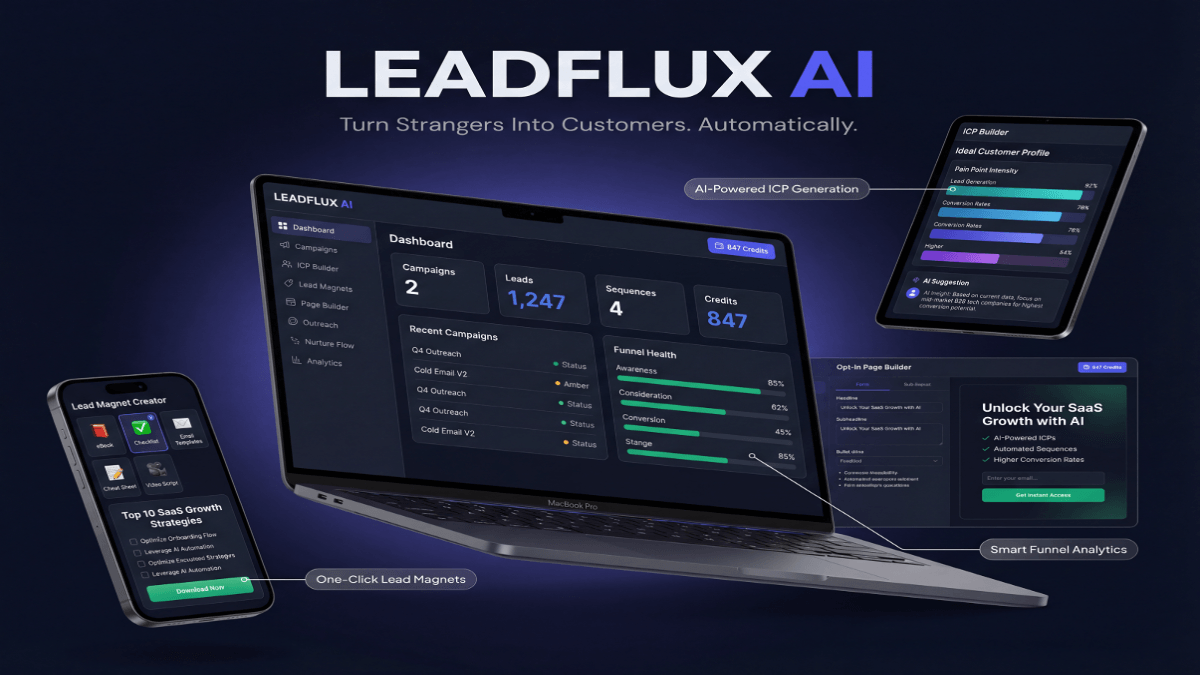
Stop Guessing. Start Converting.
LeadFlux AI Does the Heavy Lifting.
Tracking KPIs is only half the battle — you need a system that turns data into revenue. LeadFlux AI automatically identifies your highest-value prospects, scores leads in real time, and delivers conversion-ready pipelines so you can focus on closing deals, not chasing dead ends.
See How LeadFlux AI WorksLimited inventory warnings create scarcity-driven urgency for hesitant buyers. When visitors attempt to leave product pages, show genuine low-stock alerts: “Only 3 items left at this price.” This scarcity element transforms casual browsing into immediate action by introducing the fear of missing out on desired products.
Cart abandonment email capture turns departing visitors into recoverable leads even when the immediate sale fails. Your exit intent popup offers to save their cart and send a reminder email, capturing contact information while acknowledging their hesitation. This strategy creates a follow-up opportunity through automated cart recovery sequences that convert 15-30% of captured emails into completed purchases.
Advanced Segmentation and Personalization Strategies
Traffic source segmentation allows precise message matching based on how visitors discovered your site. Display different exit intent offers for organic search visitors versus paid advertising traffic versus email subscribers. Organic visitors might need more education and trust-building, while paid traffic already showed purchase intent and needs different conversion triggers to complete their journey.
Behavioral triggers based on scroll depth and engagement reveal visitor intent levels. Someone who scrolled through 80% of your sales page shows much higher interest than a visitor who bounced after 10 seconds. Tailor exit intent offers accordingly—highly engaged visitors receive stronger conversion offers while low-engagement visitors get softer lead magnets designed to continue the relationship.
Geographic personalization delivers location-specific offers and addresses regional concerns. Visitors from different countries or regions face different pain points, competitive landscapes, and purchasing behaviors. Your exit intent system can present localized case studies, region-specific pricing, or location-based urgency elements that resonate more deeply than generic global messaging.
Device-specific strategies recognize the different contexts and capabilities of desktop versus mobile users. Desktop visitors might receive detailed comparison charts or extensive resources, while mobile exit intent focuses on simple, single-action offers like SMS updates or one-tap scheduling. This device optimization ensures your exit intent experience feels native to each platform rather than forcing desktop experiences onto mobile screens.
Time-on-site thresholds prevent premature exit intent triggers that frustrate genuine browsers. Only show exit popups to visitors who spent at least 30-45 seconds on your page, indicating real engagement rather than accidental clicks. This threshold filtering improves user experience while concentrating your conversion efforts on visitors who demonstrated actual interest in your content or products.
Return visitor recognition enables progressive offers that acknowledge prior interactions. First-time visitors see foundational lead magnets, while returning visitors receive advanced resources or exclusive upgrade offers. This progression prevents repetitive messaging while deepening the relationship through increasingly valuable exchanges that move visitors along your conversion funnel.
Copywriting and Design Elements That Maximize Conversions
Headline urgency without manipulation creates legitimate reasons for immediate action. Instead of false scarcity tactics, communicate genuine time-sensitive value: “Download This Template Before Your Next Campaign” or “Get This Pricing Before Our Rate Increase Next Month.” Honest urgency builds trust while motivating action, whereas manipulative countdown timers train visitors to ignore future messages.
Benefit-focused body copy speaks directly to visitor motivations rather than feature lists. Your exit intent message should answer the visitor’s internal question: “What’s in this for me right now?” Articulate specific outcomes, time savings, or problem solutions rather than describing what your offer contains. Results-oriented language converts better because it connects offers to actual visitor goals.
Single clear call-to-action buttons eliminate decision paralysis and friction. Present one primary action you want visitors to take, making that button prominent, action-oriented, and benefit-driven. Multiple CTAs or unclear next steps reduce conversion rates by creating cognitive load at a moment when visitors already decided to leave.
Visual hierarchy through strategic design guides eyes to critical conversion elements. Use contrasting colors for CTA buttons, whitespace to highlight key benefits, and size variation to establish information priority. Your exit intent popup competes for attention at a critical moment, so visual design must instantly communicate value and guide visitors toward your desired action.
Minimal form fields reduce friction by requesting only essential information. Every additional form field decreases conversion rates, so limit exit intent forms to email address only for lead generation offers. You can collect additional qualification information through welcome sequences or progressive profiling rather than creating barriers at the initial conversion point.
Trust indicators like privacy statements and testimonial snippets address last-second objections. A simple “We respect your privacy and never share your email” message beneath your form field can increase conversions by 8-12%. Social proof elements like subscriber counts or brief testimonials provide reassurance without cluttering your popup design.
Mobile-optimized layouts ensure usability on smaller screens where most traffic originates. Your exit intent popup must be easily readable and actionable on mobile devices, with tap targets sized appropriately and content condensed for quick scanning. Mobile-unfriendly popups frustrate users and damage brand perception while failing to recover abandoning visitors.
A/B testing methodology requires systematic variation of single elements to identify conversion drivers. Test headlines against each other for one week, then test CTA button copy, then visual design elements. This disciplined approach reveals which specific changes improve performance rather than random redesigns that make attribution impossible.