Your blog posts are generating traffic but not leads. You’re watching hundreds of visitors read your content and leave without a trace. The content upgrade strategy changes everything by transforming each blog post into a dedicated lead generation machine that converts readers at the exact moment they’re most engaged. Learn more about lead magnet examples ranked by conversion rate.
Content upgrades outperform generic lead magnets by 300-500% because they offer hyper-relevant resources tailored to the specific content your reader is already consuming. While traditional opt-in forms offer the same ebook to everyone, content upgrades give each reader exactly what they want when they want it most. Learn more about repurpose blog content into lead magnets.
This framework shows you how to implement content upgrades across your entire blog using the systems and strategies that consistently deliver 15-25% conversion rates in . Learn more about content repurposing framework.
What Makes Content Upgrades Convert Better Than Traditional Lead Magnets
Content upgrades work because they leverage the psychological principle of commitment and consistency. When someone reads your 2,000-word guide on email marketing, they’ve already committed time and attention to that topic. Offering a downloadable checklist or template for that exact topic feels like a natural next step rather than an interruption. Learn more about test your lead magnets.
Traditional lead magnets sit in your sidebar offering the same resource to every visitor regardless of what they’re reading. A visitor reading about social media strategy sees the same offer as someone researching email automation. This generic approach ignores context and intent. Learn more about content upgrades that double list growth.
Content upgrades match your reader’s immediate interest with precision. They’re contextual, relevant, and valuable because they extend the content the reader is actively consuming right now.
The data supports this approach consistently. While generic sidebar opt-ins convert at 1-3%, strategically placed content upgrades routinely achieve 15-25% conversion rates. Some high-performing content upgrades reach 40-50% when the offer perfectly matches reader intent and the content quality is exceptional.
The Content Upgrade Framework: Five Types That Convert
Not every content upgrade delivers the same results. The format you choose must match both your content type and your audience’s needs. Here are the five highest-converting content upgrade types for .
The checklist content upgrade works brilliantly for process-oriented blog posts. When you publish a guide with multiple steps or considerations, a downloadable checklist that summarizes those steps becomes immediately valuable. Your reader can save it, print it, and reference it while implementing your advice.
Template content upgrades remove friction from implementation. If your blog post explains how to write cold emails, a template that readers can copy and customize saves them hours of work. Templates work exceptionally well for email sequences, social media posts, project plans, and document frameworks.
Worksheet and workbook upgrades transform passive reading into active learning. These interactive resources ask readers to answer questions, calculate numbers, or plan their strategy. A blog post about content planning becomes more valuable with an accompanying editorial calendar worksheet.
Resource list upgrades compile tools, websites, books, or services mentioned in your post plus additional recommendations. If your article references fifteen marketing tools, a downloadable resource guide with links, descriptions, and pricing information provides genuine value.
Expanded content upgrades offer deeper dives into specific sections of your post. Your 2,000-word article might cover ten strategies briefly. An expanded guide that explores three of those strategies in depth appeals to readers who want more detail without overwhelming those who prefer the overview.
How to Identify Which Blog Posts Deserve Content Upgrades
Creating content upgrades for every blog post wastes time and resources. Start by identifying your highest-potential posts using traffic data, engagement metrics, and strategic importance.
Your top traffic posts earn priority because they already attract readers. A post receiving 500 monthly visitors that converts at 20% generates 100 new leads monthly. Posts with declining traffic but strong historical performance often respond well to content upgrades that refresh their value.
Look at engagement metrics including time on page, scroll depth, and bounce rate. Posts where readers spend three minutes or more demonstrate genuine interest. These engaged readers are more likely to convert when you offer relevant additional resources.
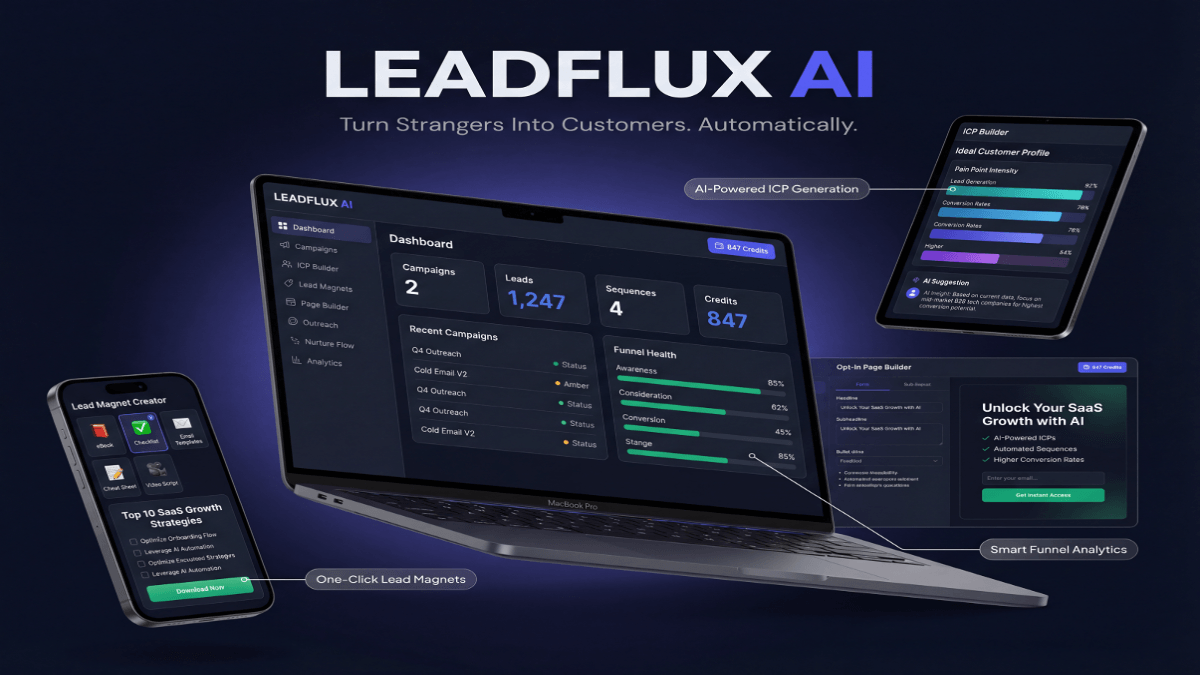
Stop Guessing. Start Converting.
LeadFlux AI Does the Heavy Lifting.
Tracking KPIs is only half the battle — you need a system that turns data into revenue. LeadFlux AI automatically identifies your highest-value prospects, scores leads in real time, and delivers conversion-ready pipelines so you can focus on closing deals, not chasing dead ends.
See How LeadFlux AI WorksConsider strategic importance alongside traffic numbers. A post that attracts your ideal customer profile deserves a content upgrade even with moderate traffic. Converting 50 highly qualified leads beats converting 200 poor-fit prospects.
Search intent matters significantly. Posts targeting informational searches convert better with educational content upgrades. Posts targeting commercial searches need templates and tools that support buying decisions. Match your content upgrade format to search intent for optimal results.
| Blog Post Type | Best Content Upgrade | Average Conversion Rate | Implementation Time |
|---|---|---|---|
| How-to Guide | Checklist or Template | 18-25% | 2-3 hours |
| List Post | Expanded Resource Guide | 15-22% | 3-4 hours |
| Case Study | Implementation Worksheet | 12-18% | 2-3 hours |
| Strategy Post | Planning Template | 20-28% | 4-5 hours |
| Tool Comparison | Decision Framework | 16-23% | 3-4 hours |
The data above represents averages — your results will vary based on implementation quality and consistency.
Creating Content Upgrades That People Actually Want
The difference between a content upgrade that converts at 5% and one that converts at 25% often comes down to perceived value and immediate usefulness. Your content upgrade must feel like a natural extension of your blog post that makes implementation easier or results better.
Start by identifying the biggest obstacle your reader faces after consuming your content. If your post explains SEO keyword research, the obstacle might be organizing and prioritizing keywords. A keyword tracking spreadsheet solves that specific problem.
Make your content upgrade format match the effort level you’re asking for. Readers readily exchange their email for a one-page checklist. They hesitate before downloading a 50-page ebook that requires significant reading time. Quick-reference formats typically outperform long-form content upgrades.
Design matters more than most marketers realize. A professionally designed PDF communicates value before anyone reads the content. Use consistent branding, clear typography, adequate white space, and organized layouts. Free tools like Canva make professional design accessible without graphic design skills.
Test your content upgrade title obsessively. The title appears on your opt-in form and determines whether readers convert. Specific titles outperform generic ones. “The 15-Point Blog Post Optimization Checklist” converts better than “Free Blogging Guide” because it sets clear expectations.
Include your branding throughout the content upgrade. Every PDF, spreadsheet, or template should reinforce your brand identity and include your website URL. These resources get shared, saved, and referenced over time. Make sure they lead back to you.
Strategic Placement: Where and How to Promote Your Content Upgrades
Even the most valuable content upgrade fails without strategic placement. Your offer needs visibility at the moments when readers are most engaged and receptive.
The most effective placement appears mid-content after you’ve delivered value but before the conclusion. Readers who scroll past your introduction are engaged enough to consider your offer. Place your content upgrade opt-in form after making your strongest points but while reader interest remains high.
Multiple placements increase conversions without annoying readers when done correctly. Include your content upgrade at the end of your introduction, midway through your content, and in your conclusion. Each placement catches readers at different engagement levels.
Make your opt-in forms visually distinct without being disruptive. Use color contrast and border styling to make the form noticeable. Include a small relevant icon or image. Keep form fields minimal with just email address or name plus email at most.
Your call-to-action copy significantly impacts conversion rates. Focus on the benefit rather than the action. “Get the complete checklist” works better than “Download now.” “Send me the templates” feels more personal than “Submit.”
Consider exit-intent popups for high-value content upgrades on your top-performing posts. These appear when readers move to close the tab or navigate away. Exit-intent popups convert at lower rates than in-content forms but capture leads you would otherwise lose completely.
Technical Implementation: Tools and Systems for Delivering Content Upgrades
The backend systems for content upgrades must work flawlessly. Nothing damages credibility faster than a broken download link or an email that never arrives.
Your email marketing platform handles content upgrade delivery through automated welcome sequences. When someone opts in, your system immediately sends a welcome email containing their content upgrade. This email should arrive within minutes, not hours.
Segment subscribers based on which content upgrade they downloaded. Someone who downloads your email marketing checklist has different interests than someone who gets your social media calendar template. Use these segments for targeted follow-up campaigns that match demonstrated interests.
Host content upgrade files reliably. Upload PDFs and files to your email platform’s file storage or use cloud storage with public sharing links. Test these links regularly to ensure they remain accessible. Broken links destroy trust immediately.
Consider using dedicated content upgrade plugins for WordPress that streamline creation and management. These tools let you create unique opt-in forms for each post, track conversion rates, and manage file delivery without touching code.
Track content upgrade performance religiously. Monitor opt-in conversion rates, download rates, and subscriber engagement for each content upgrade. This data reveals which formats and topics resonate most strongly with your audience.
Scaling Your Content Upgrade Strategy Across Multiple Posts
Creating individual content upgrades for dozens of blog posts seems overwhelming. Smart systems and strategic batching make scaling manageable without sacrificing quality.
Start with your top ten posts by traffic. These represent your biggest opportunity for immediate lead generation impact. Create high-quality content upgrades for these posts before expanding to lower-traffic content.
Batch similar content upgrades for efficiency. If you’re creating checklist-style upgrades for five posts, design a consistent template once and adapt the content for each post. This approach maintains quality while reducing design time significantly.
Repurpose and remix existing content into upgrade formats. That comprehensive guide you wrote contains multiple checklists, templates, and resources waiting to be extracted. Mine your existing content library before creating everything from scratch.
Consider creating category-level content upgrades for related posts. Five blog posts about email marketing could share one comprehensive email marketing toolkit. This approach works when posts cover different aspects of the same topic.
Schedule regular content upgrade creation sessions. Dedicate one day monthly to creating three to five new content upgrades. Consistent batched work beats sporadic efforts and builds a substantial content upgrade library over time.
The content upgrade strategy transforms your blog from a passive information resource into an active lead generation system. Every post becomes an opportunity to convert interested readers into engaged subscribers who know your expertise and trust your recommendations.
Start small with your highest-traffic posts and expand systematically. Focus on creating genuinely useful resources that extend your content’s value. Monitor your conversion rates and refine your approach based on real performance data.
Your blog content already attracts your ideal audience. Content upgrades ensure you capture those visitors and nurture them into customers rather than watching them disappear forever.
For more lead generation strategies, explore our guides on email list building tactics, landing page optimization, and lead nurturing campaigns. External resources: Check out Content Marketing Institute’s research on content upgrade effectiveness and HubSpot’s database of high-converting lead magnet examples for additional insights and inspiration.