Choosing the best small business email marketing software can feel overwhelming when you’re juggling a dozen other priorities. You need a platform that’s affordable, easy to use, and powerful enough to grow with you — but not so complex that you need a degree in marketing automation to send a simple newsletter.
The right email marketing software becomes your most reliable sales channel. It helps you nurture leads, recover abandoned carts, announce new offers, and stay top-of-mind with customers who already trust you. For small businesses, email consistently delivers the highest ROI of any marketing channel, often returning $36 for every dollar spent.
This guide breaks down the top platforms built specifically for small business needs. We’ll cover pricing structures, standout features, ease of use, and which software fits different business models best.
What Makes Email Marketing Software Right for Small Businesses
Not every email platform is built with small businesses in mind. Enterprise tools overwhelm you with features you’ll never use. Cheap tools trap you with hidden costs or terrible deliverability. The sweet spot sits between simplicity and capability.
Look for these non-negotiables: drag-and-drop email builders that don’t require coding, list segmentation so you can send targeted messages, basic automation for welcome sequences and follow-ups, mobile-responsive templates that look good on every device, and transparent pricing that scales reasonably as your list grows.
Integration capability matters more than most realize. Your email software should connect seamlessly with your CRM, e-commerce platform, booking system, or lead capture forms. Manual data entry kills momentum and creates errors.
Deliverability separates the professionals from the pretenders. A beautiful email means nothing if it lands in spam. Established platforms with strong sender reputations and dedicated IP options give your messages the best chance of reaching actual inboxes.
Top Email Marketing Platforms for Small Business Owners
These platforms consistently rank highest for small business use cases. Each brings distinct strengths to different scenarios.
Mailchimp: The Familiar Starter Option
Mailchimp dominates brand recognition for good reason. The free tier supports up to 500 contacts and 1,000 monthly sends, making it ideal for testing email marketing before committing budget. The interface feels intuitive, templates look modern, and basic automation handles welcome emails and abandoned cart recovery.
The trade-off comes as you scale. Pricing jumps significantly beyond the free tier, and Mailchimp’s support for free users consists mainly of help articles. Advanced segmentation requires paid plans, and some users report deliverability issues as lists grow. Best fit: absolute beginners or businesses testing email viability.
ConvertKit: Built for Creators and Service Businesses
ConvertKit targets creators, coaches, and service providers who need sophisticated automation without complexity. The visual automation builder lets you create behavior-triggered sequences that feel personal at scale. Tagging and segmentation work intuitively, and the landing page builder eliminates the need for separate software.
Pricing starts higher than some competitors, but subscriber-based pricing means you pay for unique contacts across multiple lists, not duplicate entries. The email designer prioritizes clean, text-focused layouts over flashy graphics. If you sell courses, memberships, or consulting, ConvertKit’s commerce integrations shine. Best fit: solopreneurs and service businesses focused on relationship building.
When you capture leads through multiple channels, connecting them to your email workflows becomes critical — LeadFlux AI for centralized lead routing ensures every prospect enters the right nurture sequence automatically.
ActiveCampaign: Power Without the Enterprise Price Tag
ActiveCampaign delivers enterprise-level automation at small business pricing. The platform combines email marketing, CRM, and sales automation in one system. Conditional logic lets you build sophisticated workflows where next steps depend on subscriber behavior, purchase history, or engagement patterns.
The learning curve runs steeper than simpler platforms, but the investment pays off. Lead scoring, predictive sending, and split automation paths help you maximize every contact. Customer support consistently earns high marks. Best fit: growing businesses ready to implement advanced automation and need CRM functionality built in.
Brevo (Formerly Sendinblue): Generous Sending Limits
Brevo flips the pricing model by limiting daily sends rather than contact counts. The free tier includes unlimited contacts with 300 emails per day. For businesses with large but infrequent email needs, this structure saves significantly. SMS marketing bundles into the platform, and the transactional email service handles receipts, shipping notifications, and password resets.
Template options feel less modern than competitors, and the interface can seem cluttered. But the value proposition remains strong for bootstrapped businesses building large lists early. Best fit: businesses with growing contact lists but moderate sending frequency, or those needing SMS alongside email.
GetResponse: E-commerce Integration Champion
GetResponse targets online sellers with product recommendation engines, abandoned cart automation, and revenue tracking built directly into campaigns. The platform includes webinar hosting, making it uniquely valuable for businesses using webinars as lead generation tools. Conversion funnels bundle landing pages, email sequences, and payment processing into complete campaigns.
Pricing sits in the mid-range, and the feature set can feel overwhelming initially. The autoresponder functionality works reliably, though the interface feels slightly dated compared to newer platforms. Best fit: e-commerce businesses and those using webinars as core marketing tactics.
Comparing Pricing Models and Hidden Costs
Email marketing software pricing looks deceptively simple until you read the fine print. Most platforms charge based on subscriber count, but definitions of “subscriber” vary. Some count every email address once; others count duplicate entries across multiple lists.
| Platform | Starting Price | Free Tier | Pricing Model |
|---|---|---|---|
| Mailchimp | $13/month | 500 contacts, 1,000 sends/month | Per contact (duplicates counted) |
| ConvertKit | $15/month | 1,000 subscribers | Per subscriber (duplicates merged) |
| ActiveCampaign | $29/month | None | Per contact with tiered features |
| Brevo | $9/month | Unlimited contacts, 300 sends/day | Per email sent |
| GetResponse | $19/month | 500 contacts (limited time) | Per contact with feature tiers |
Watch for these cost inflators: dedicated IP addresses for better deliverability often run $30-50 monthly extra, email send limits that force tier upgrades even when your list hasn’t grown, premium templates or stock photos behind paywalls, and support access restricted to higher-priced plans.
Calculate your true cost by projecting list growth over 12 months, not just your current size. A cheaper platform today might become expensive faster than a mid-priced option with better scaling economics.
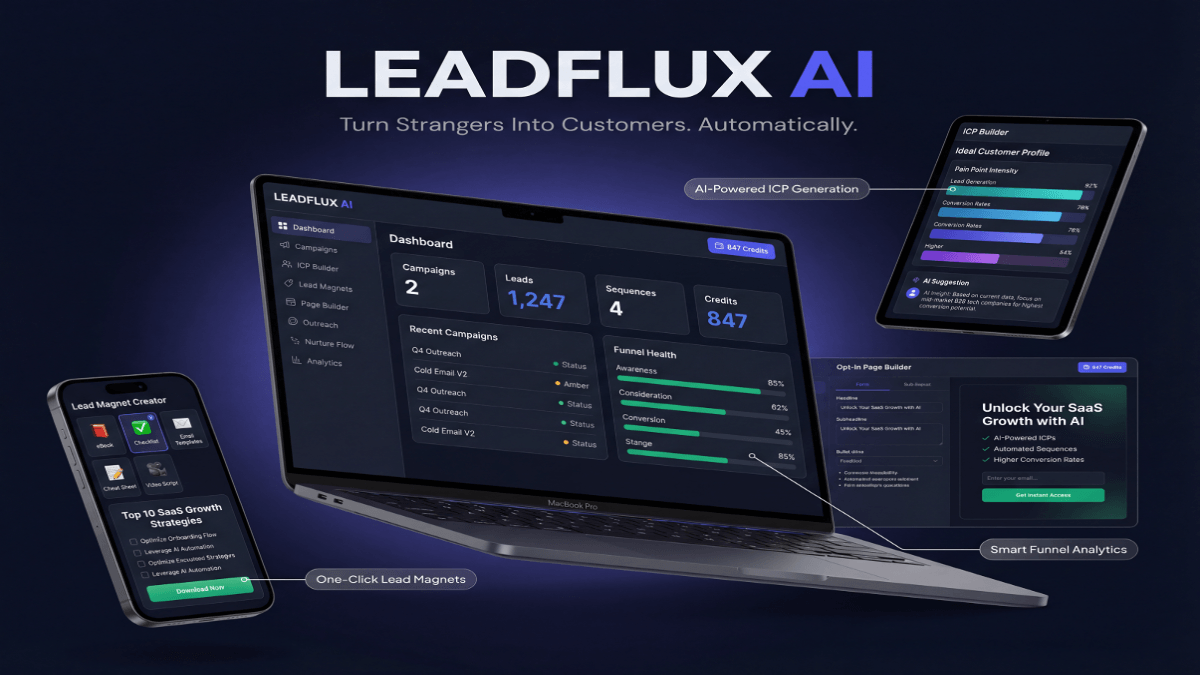
Stop Guessing. Start Converting.
LeadFlux AI Does the Heavy Lifting.
Tracking KPIs is only half the battle — you need a system that turns data into revenue. LeadFlux AI automatically identifies your highest-value prospects, scores leads in real time, and delivers conversion-ready pipelines so you can focus on closing deals, not chasing dead ends.
See How LeadFlux AI WorksEssential Features You Actually Need
Feature checklists from vendors mix genuine necessities with nice-to-haves that bloat pricing. Here’s what small businesses actually use consistently.
- Automation workflows: At minimum, welcome sequences for new subscribers and abandoned cart recovery for e-commerce. Advanced users benefit from behavior-triggered campaigns based on link clicks, page visits, or purchase patterns.
- Segmentation: The ability to divide your list by purchase history, engagement level, demographic data, or custom tags. Relevant emails convert 3-5x better than broadcast blasts.
- A/B testing: Subject line and content testing improve open and click rates over time. Even simple split tests between two versions provide valuable insights.
- Analytics dashboard: Open rates, click rates, conversion tracking, and unsubscribe patterns tell you what’s working. Revenue attribution shows which campaigns generate actual sales.
- Mobile optimization: Over 60% of emails get opened on mobile devices. Templates must render properly on small screens automatically.
- Form builders: Embedded and popup forms for list growth. Bonus points for exit-intent triggers and multi-step forms.
Features you probably don’t need yet: social media post scheduling, advanced predictive analytics, multi-variate testing beyond basic A/B, SMS marketing unless your industry specifically benefits, and landing page builders if you already use dedicated software.
Making the Right Choice for Your Business Model
Your business model narrows the field significantly. Service businesses have different needs than e-commerce stores. Local businesses need different tools than digital product sellers.
For e-commerce: prioritize platforms with product recommendation engines, abandoned cart automation, and revenue tracking. GetResponse and ActiveCampaign excel here. Integration with Shopify, WooCommerce, or your store platform must work flawlessly.
For service businesses and coaches: relationship building outweighs transaction focus. ConvertKit and ActiveCampaign offer the best tagging and automation for nurturing leads through longer sales cycles. Landing page builders help capture leads without maintaining a separate tool.
For local businesses: simpler platforms like Mailchimp or Brevo often suffice. You need reliable monthly newsletters, event announcements, and special offers, not complex funnels. Geographic segmentation helps target customers by location.
For content creators and publishers: subscriber growth and engagement metrics matter most. ConvertKit’s creator focus and Mailchimp’s content studio features support regular publishing schedules and audience building.
The best email platform is the one you’ll actually use consistently. A simpler tool used weekly beats a powerful platform that overwhelms you into inaction.
Implementation Strategy and Migration Tips
Switching email platforms mid-stream feels risky, but staying with the wrong tool costs more over time. Plan your migration carefully to preserve deliverability and maintain subscriber trust.
Export your current list with full data fields — names, tags, custom fields, and subscription dates. Most platforms support CSV imports. Clean your list before migration by removing hard bounces, unengaged contacts over 12 months old, and obvious spam addresses. A smaller, cleaner list performs better than a bloated one.
Run both platforms parallel for 2-3 weeks if possible. Send identical campaigns through both to compare deliverability and engagement rates. This tests the new platform without fully committing.
Warm up new IP addresses gradually if you’re moving to a platform with dedicated IPs. Start with your most engaged segment and slowly increase volume. Jumping from zero to your full list overnight triggers spam filters.
Recreate your core automation workflows first — welcome sequences, abandoned cart flows, and post-purchase series drive the most revenue. Secondary automations can migrate over time as you master the new platform.
Frequently Asked Questions
What is the best small business email marketing software for beginners?
Mailchimp offers the most beginner-friendly interface with generous free tier limits, making it ideal for testing email marketing before committing budget. The drag-and-drop builder requires no technical skills, and pre-built templates help you launch campaigns quickly.
How much does email marketing software cost for small businesses?
Most platforms charge $10-30 monthly for lists under 1,000 subscribers, scaling to $50-150 monthly for 5,000-10,000 contacts. Free tiers work for very small lists, but paid plans unlock essential automation and segmentation features that drive results.
Can I switch email marketing platforms without losing subscribers?
Yes, you can export your list from most platforms as a CSV file and import it into your new software. The key is maintaining clean data during transfer and properly warming up any new sending infrastructure to preserve deliverability rates.
What email marketing features do small businesses need most?
Essential features include automation workflows for welcome sequences and follow-ups, list segmentation for targeted messaging, mobile-responsive templates, basic A/B testing, and clear analytics showing open rates, click rates, and conversions. Advanced features can wait until you’ve mastered these fundamentals.
How do I choose between contact-based and send-based pricing?
Contact-based pricing works better if you send frequent emails to smaller lists. Send-based pricing (like Brevo) saves money when you have many subscribers but email infrequently. Calculate your typical monthly sends and compare costs across both models before deciding.
Which email software integrates best with other small business tools?
ActiveCampaign and Mailchimp offer the broadest integration ecosystems, connecting with virtually every CRM, e-commerce platform, and marketing tool. Check that your specific software stack has native integrations or Zapier connections before committing to any platform.
Choose Your Platform and Start Building
The best small business email marketing software aligns with your current skill level, business model, and growth trajectory. Start with a platform that feels manageable today but offers room to grow as your sophistication increases. Most vendors offer free trials — test the interface, build a sample campaign, and evaluate whether the workflow feels natural.
Your email list represents your most valuable marketing asset. Unlike social media followers or search rankings, you own the relationship directly. The right software turns that asset into consistent revenue through strategic automation, precise targeting, and campaigns that strengthen customer relationships with every send.