How Solo Service Providers Can Replicate Maya’s 5-Day Email Challenge System
Maya, a solo nutritionist with no ad budget and a modest social following, built a fully booked client roster using a single repeatable system: a 5-day email challenge. The mechanics she used are not unique to nutrition — coaches, therapists, designers, and consultants can deploy the exact same structure to convert cold subscribers into paying clients. This case study breaks down the system step by step so you can adapt it to your own service business. If you are ready to build your email list strategically, this framework gives you a proven starting point.
What made Maya’s challenge work was not a clever subject line or a viral social post — it was architecture. Each of the five days served a specific psychological function, moving participants from awareness to desire to action. When you understand the underlying logic, you can swap in your own niche, your own language, and your own offer. The pattern is replicable because it is built on how people make decisions, not on any one person’s brand or personality. Learn more about 7-day email challenge funnel.
The Core Architecture of a 5-Day Email Challenge That Converts
A 5-day email challenge is not a mini-course and it is not a nurture sequence. It is a structured experience that creates momentum, builds identity, and ends with a natural invitation to go deeper. Maya’s challenge was called “5 Days to a Calmer Gut,” but the structure would work equally well for a business coach running “5 Days to Your First Paying Client” or a UX designer offering “5 Days to a Portfolio That Gets Responses.” The container is flexible — the architecture is fixed. Learn more about 5-day challenge funnel for list growth.
Day one establishes a shared problem and creates an emotional hook. Day two delivers a quick win that proves your method works. Day three introduces a reframe — a new way of seeing the problem that only your framework addresses. Day four builds social proof and handles objections before they surface. Day five makes the offer, framed not as a pitch but as the logical next step for someone who has followed along and seen results. This five-part arc maps directly onto the buyer journey, which is why it converts at higher rates than standard newsletter sequences. Learn more about welcome email sequence for service businesses.
Marcus, a productivity coach, adapted this framework for corporate professionals feeling overwhelmed at work. His challenge, “5 Days to a Cleared Inbox and a Cleared Mind,” generated 340 sign-ups from a single LinkedIn post and converted 18 participants into a group coaching program within the same week. The niche changed. The email architecture stayed identical. If you want to see how this connects to setting up your email platform correctly from the start, that foundation is worth getting right before you launch.
The key operational requirement is that each email must be short enough to read in under three minutes and must end with a single micro-action. Maya’s day two email asked participants to remove one food from their breakfast the next morning. Marcus’s asked participants to unsubscribe from five email lists before noon. These micro-actions are not random — they are chosen to create a small behavioral win that increases the participant’s confidence in your method and their investment in the process. Learn more about follow-up email conversion case study.
How Maya Built Her Audience Before the Challenge Launched
Maya did not launch her challenge to a large list. She launched to 210 subscribers she had built over four months using a single lead magnet: a free three-page guide called “The Weekend Reset Meal Plan.” The guide was specific, immediately useful, and directly connected to the problem her challenge would solve. This alignment between lead magnet and challenge is not optional — it is what determines whether your challenge sign-up rate is 15% or 60%. When someone opts in for a meal plan guide and then receives an invitation to a gut health challenge, the logical thread is clear and the conversion is easy. Learn more about monetizing a small email list as a coach.
Priya, an independent brand designer, ran a parallel experiment. She had built a list of 180 subscribers using a “Brand Color Audit Checklist” and then launched a “5 Days to a Brand That Attracts Premium Clients” challenge. Her sign-up rate was 58% because the lead magnet and the challenge addressed the same pain point from two different angles — the checklist diagnosed the problem, and the challenge promised to fix it. This pattern of lead-magnet-to-challenge alignment is the single highest-leverage thing you can do before pressing send.
Maya promoted her challenge through three channels: her existing email list, one Instagram story series, and a single post in a Facebook group for women interested in wellness. She did not run ads. She did not partner with influencers. The total promotional effort took four hours across two days. The challenge attracted 127 sign-ups, representing a 60% conversion rate from her existing list — which is consistent with what happens when your lead magnet and challenge are tightly connected around a single specific problem.
The pre-challenge welcome sequence also matters. Maya sent two emails before day one: one that confirmed the sign-up and introduced the format, and one that asked participants a single question — “What is the one thing you most want to fix in how you eat?” The replies she received gave her real language from real people, which she wove into her day one email. This practice, known as voice-of-customer research, makes every subsequent email feel like it was written specifically for the reader, not for a generic audience.
The Offer Structure That Turned Participants Into Paying Clients
Maya’s day five email did not contain a hard sell. It contained an invitation to a free 30-minute discovery call, framed specifically as a “Challenge Wrap-Up Call” for participants who had completed all five days. The framing mattered enormously. Calling it a discovery call would have reduced response rates significantly because that language signals a sales conversation. Calling it a wrap-up call for challenge completers created exclusivity and positioned the call as a reward for participation, not a pitch.
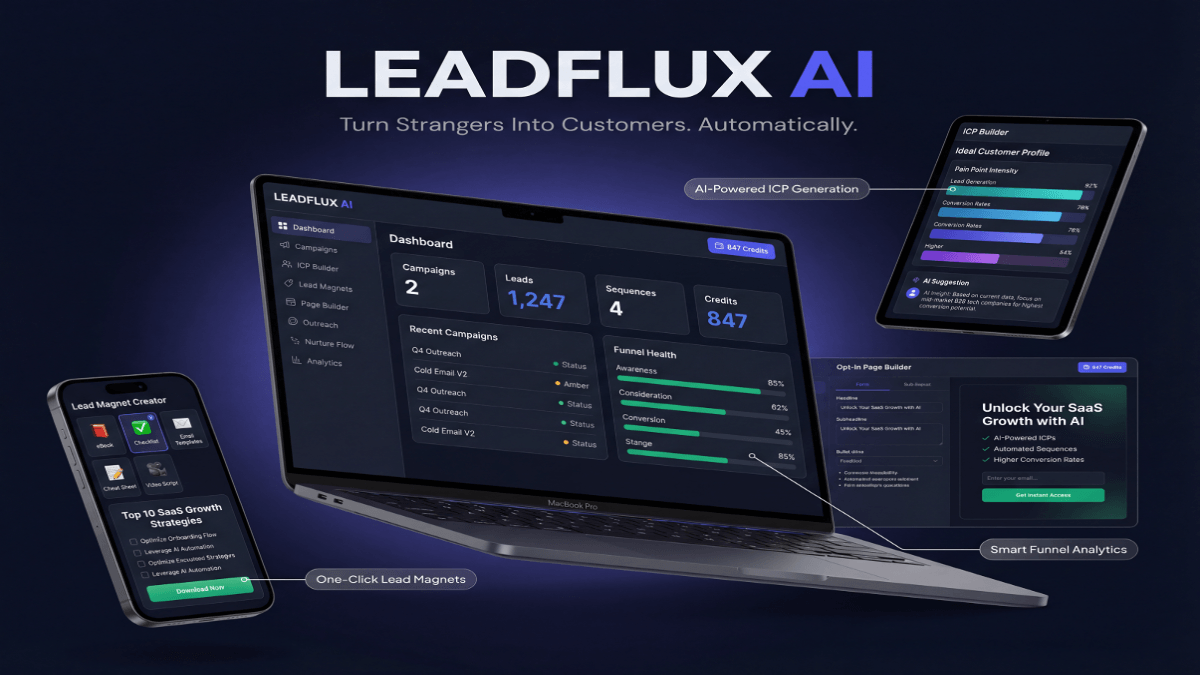
Stop Guessing. Start Converting.
LeadFlux AI Does the Heavy Lifting.
Tracking KPIs is only half the battle — you need a system that turns data into revenue. LeadFlux AI automatically identifies your highest-value prospects, scores leads in real time, and delivers conversion-ready pipelines so you can focus on closing deals, not chasing dead ends.
See How LeadFlux AI WorksOf the 127 challenge participants, 41 clicked through to the booking page. Of those, 28 booked a call. Maya converted 12 of those 28 calls into her three-month nutrition program, priced at $700. That single challenge launch generated $8,400 in revenue from a list of 210 people and a four-hour promotional effort. The math is not magic — it is what happens when you run a structured, high-value challenge to a warm and well-aligned audience. You can model your own discovery call process using these discovery call templates to prepare for conversations that convert without feeling pushy.
Marcus, the productivity coach mentioned earlier, used a slightly different offer structure. Instead of individual discovery calls, he invited challenge completers into a live group Q&A session at the end of day five, then made a group program offer at the close of the call. His conversion rate from attendee to buyer was 31%, which is consistent with the conversion rates reported by coaches who use live group formats rather than one-to-one calls. The specific offer mechanism matters less than the underlying principle: the offer must feel like the natural continuation of something the participant already started and already values.
Priya offered a paid brand audit session at a $250 entry price point rather than a high-ticket program. This lower commitment threshold made sense for her audience of early-stage business owners who were not yet ready to invest in full branding packages. Her challenge converted 22% of participants into audit bookings, which then served as the pipeline for her $2,800 full brand identity packages over the following 60 days. The challenge was not designed to close her biggest offer immediately — it was designed to start a relationship at an accessible price and let quality of work do the rest of the selling.
Repeating and Scaling the Challenge System Over Time
The most significant advantage of the 5-day challenge format is that it is reusable without becoming stale. Maya ran her challenge four times across a 12-month period, each time to a fresh batch of subscribers who had opted in for her lead magnet. She made minor refinements after each run based on reply rates, open rates, and call conversion data — but the core five emails stayed largely intact. By the fourth run, her open rates had climbed from 44% to 61% because her subject line testing had identified the exact framing that resonated with her audience.
Scaling a challenge does not require a larger list — it requires a more optimized funnel. After her second run, Maya added a post-challenge email sequence for participants who did not book a discovery call during the initial window. This three-email follow-up sequence, sent over the 10 days after the challenge ended, recovered an additional three to five clients per run. That sequence alone added roughly $2,100 in revenue per challenge cycle that would otherwise have been left on the table. If you want to map out the full structure of a sequence like this, the email list-building playbook covers post-challenge follow-up in detail.
Marcus eventually licensed his 5-day challenge framework to three other productivity coaches in non-competing niches, creating a passive revenue stream alongside his active coaching practice. That is an advanced step, but it illustrates the scalability ceiling of a well-documented challenge system. Once you have run the challenge two or three times and refined the emails based on real data, you have a documented asset — not just a one-time campaign. That asset can be templated, taught, or licensed in ways a single service offering cannot.
The practical starting point for any solo service provider is to run the challenge once, document everything, and resist the urge to overcomplicate the second run. The goal of run one is to test the core assumptions: does your audience sign up, do they engage with the daily emails, and does the offer on day five generate calls or bookings? If all three answers are yes, you have a validated system. If one answer is no, you have a clear variable to isolate and fix before run two. This iterative approach is what separates solo providers who build scalable practices from those who stay stuck on the content treadmill.
I’ve found that automating the initial lead scoring process with LeadFlux AI for lead qualification has freed up at least 10 hours per week that my sales team used to spend manually vetting prospects.
Conclusion: The System Is the Asset
Maya’s results were not the product of a large following, a big budget, or a particularly unusual niche. They were the product of a repeatable, well-structured system applied consistently to a warm and aligned audience. The same system worked for a productivity coach and a brand designer because the underlying mechanics — quick wins, emotional momentum, a logical offer — are not niche-specific. They are human-specific.
If you are a solo service provider who has been looking for a client acquisition approach that does not require paid ads, daily social posting, or a massive email list, the 5-day challenge format is one of the most efficient tools available. Start with a tightly focused lead magnet, build a 5-email challenge around a single specific transformation, and end with an offer that feels like the obvious next step. Run it once, measure everything, and improve one variable at a time. The system you build through that process is the real asset — and it compounds every time you run it.