Your email subject line isn’t the only text fighting for attention in crowded inboxes. Preview text—that secondary snippet displayed next to or below your subject line—can be the deciding factor between an open and a delete. Yet most marketers either ignore this prime real estate or let their email platforms auto-populate it with generic header text like “View this email in your browser” or “Trouble seeing this message?” This oversight represents a massive missed opportunity. Learn more about email preheader optimization.
Research shows that optimized preview text can boost open rates by an average of 34%, yet only 23% of brands actively optimize this element. The preview text serves as your subject line’s co-pilot, providing additional context, creating intrigue, or delivering a compelling reason to open. When strategically crafted, it transforms your email from a single-punch message into a one-two combination that dramatically improves engagement metrics across every campaign you send. Learn more about personalization token strategy.
This guide reveals nineteen proven preview text formulas that drive measurable results. Each formula addresses specific psychological triggers, campaign objectives, and audience behaviors. By the end, you’ll possess a complete framework for crafting preview text that complements your subject lines, speaks directly to recipient motivations, and consistently outperforms generic alternatives. Learn more about subject line length testing.
Understanding Preview Text Mechanics and Psychology
Preview text occupies a unique position in email marketing hierarchy. While subject lines grab initial attention, preview text provides the critical context that converts curiosity into action. Most email clients display between 35 and 140 characters of preview text, depending on device type and platform specifications. Mobile devices typically show fewer characters than desktop clients, making every word count even more in a mobile-first world. Learn more about dynamic content blocks.
The psychology behind effective preview text centers on completion and curiosity. When your subject line poses a question or makes a bold claim, preview text can either answer it partially (creating satisfaction) or deepen the mystery (intensifying curiosity). This strategic decision depends entirely on your campaign goals and audience sophistication level. B2B audiences often respond better to completion-style preview text that demonstrates clear value, while consumer audiences frequently engage more with curiosity-driven approaches. Learn more about email segmentation strategies.
Technical optimization matters as much as psychological strategy. Most email service platforms allow you to set custom preview text through dedicated fields or hidden preheader text in your HTML. Never leave this field blank or allow default content to appear. Testing across multiple email clients ensures your preview text displays correctly across Gmail, Outlook, Apple Mail, and mobile applications. Character count varies by platform: Gmail shows approximately 120 characters on desktop, Apple Mail displays around 140, while mobile clients often truncate at 55-70 characters.
Preview text functions best when it works in concert with your subject line rather than simply repeating it. Repetition wastes valuable space and provides no additional information to entice opens. Instead, use preview text to expand on your subject line’s promise, add urgency, introduce social proof, or highlight a secondary benefit that appeals to different motivations within your audience. This complementary approach effectively doubles your messaging real estate in the inbox.
Benefit Amplification and Value Extension Formulas
The benefit amplification approach builds directly on your subject line’s value proposition by expanding it with specific details. Formula one pairs a benefit-focused subject line with quantified preview text: “Subject: Transform Your Email Strategy | Preview: See how these three tactics increased response rates 67% in fourteen days.” This combination moves from conceptual benefit to concrete proof, addressing both the emotional appeal and logical justification recipients need to open.
Formula two employs the feature-to-benefit translation technique. When your subject line highlights a feature, your preview text translates that feature into tangible outcomes: “Subject: Introducing Automated Segmentation | Preview: Send perfectly-timed messages to the right prospects without manual list management.” This approach works exceptionally well for product launches, feature announcements, and tool-based offerings where the connection between capability and outcome needs clarification.
The benefit stacking formula layers multiple advantages into your preview text, creating an irresistible value package: “Subject: Your Complete Lead Generation Blueprint | Preview: Proven templates, implementation checklists, and expert walkthroughs—everything you need in one place.” This formula performs particularly well with comprehensive resources, bundle offers, or educational content where multiple valuable components justify the open. Each stacked benefit should be genuinely distinct rather than reiterating the same value in different words.
Formula four uses contrast to amplify benefits by highlighting what recipients avoid or gain: “Subject: Simplify Your Outreach Process | Preview: Stop wasting six hours weekly on manual follow-ups and start closing more deals.” The before-and-after framing creates a clear mental picture of transformation, making the benefit feel more tangible and personally relevant. This formula leverages loss aversion psychology—the tendency to be more motivated by avoiding losses than acquiring gains.
Curiosity Gap and Intrigue-Building Formulas
Curiosity gap formulas deliberately withhold specific information that recipients can only discover by opening. Formula five uses the partial reveal technique: “Subject: The Mistake That’s Killing Your Open Rates | Preview: It’s hiding in plain sight, and 73% of marketers make it without realizing…” This approach creates tension between what’s revealed and what remains unknown, triggering the psychological need for closure that drives opens.
The counterintuitive statement formula challenges conventional wisdom in your subject line and uses preview text to deepen the paradox: “Subject: Why Better Subject Lines Hurt Your Results | Preview: Data from 40,000 campaigns reveals the surprising truth about what really drives engagement.” This formula works because it creates cognitive dissonance—the discomfort of holding two conflicting ideas simultaneously. Recipients open to resolve this mental tension and discover how the seemingly contradictory statement makes sense.
Formula seven employs the insider secret approach, positioning your email content as privileged information: “Subject: What Top Performers Know About Email Timing | Preview: The sending schedule they use contradicts everything you’ve heard, but the results speak for themselves.” This formula activates social proof and FOMO (fear of missing out) simultaneously. Recipients want both to access elite knowledge and avoid being left behind their higher-performing peers.
The unanswered question formula poses a specific, intriguing question in preview text that your email promises to answer: “Subject: Your Q4 Email Calendar | Preview: Should you email more or less frequently during the holidays? The answer isn’t what most marketers think.” This technique works because questions activate the brain differently than statements. They create an open loop that the mind seeks to close, making the email opening feel like completing an unfinished task rather than consuming marketing content.
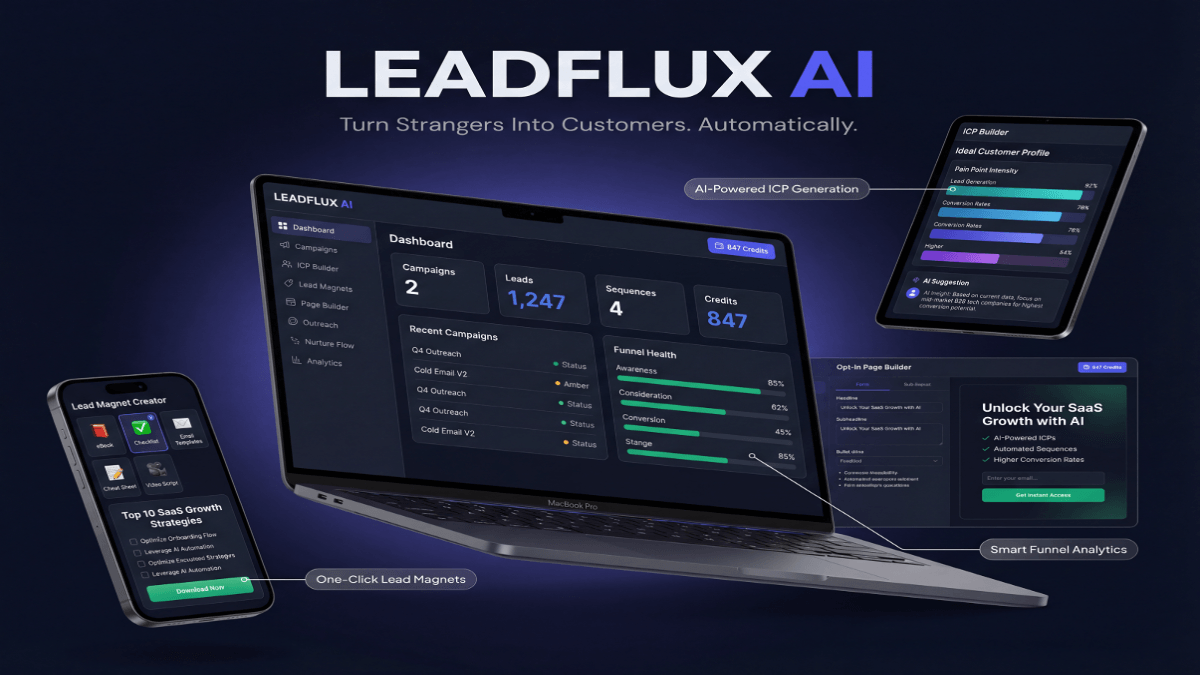
Stop Guessing. Start Converting.
LeadFlux AI Does the Heavy Lifting.
Tracking KPIs is only half the battle — you need a system that turns data into revenue. LeadFlux AI automatically identifies your highest-value prospects, scores leads in real time, and delivers conversion-ready pipelines so you can focus on closing deals, not chasing dead ends.
See How LeadFlux AI WorksUrgency, Scarcity, and Action-Driving Formulas
Time-based urgency formulas leverage deadline psychology to accelerate opens. Formula nine combines deadline communication with consequence clarity: “Subject: Last Day for Early Access | Preview: Price increases tomorrow—lock in your current rate before midnight tonight.” This approach works because it establishes both the timeframe and the specific cost of inaction. Vague urgency (“Don’t miss out!”) underperforms specific deadline communication that clearly states what happens when time expires.
The scarcity indicator formula highlights limited availability in concrete terms: “Subject: Exclusive Workshop Invitation | Preview: Only twelve spots remain for this cohort—registration closes when we reach capacity.” Quantity-based scarcity often outperforms time-based urgency for high-value offerings because it suggests demand from others rather than arbitrary deadlines. This social proof element makes the scarcity feel more authentic and the opportunity more valuable.
Formula eleven uses the consequence preview technique to illustrate what recipients lose by waiting: “Subject: Your Account Needs Attention | Preview: Inactive contacts will be archived next week—review your list now to prevent data loss.” This formula works particularly well for account management, compliance communications, and renewal campaigns where genuine consequences exist. The key is ensuring consequences are real and proportional rather than manufactured urgency that damages trust.
The action-cost comparison formula quantifies the minimal effort required relative to the significant benefit gained: “Subject: Boost Your Deliverability Score | Preview: Two-minute audit identifies the issues hurting your inbox placement—fix them in under ten minutes.” By explicitly stating the low time investment required, this formula removes the anticipated effort barrier that often prevents opens. It works especially well for task-oriented emails, onboarding sequences, and optimization recommendations where perceived complexity might create resistance.
Personalization, Relevance, and Segmentation Formulas
Personalized preview text dramatically outperforms generic alternatives when executed properly. Formula thirteen incorporates behavioral data into preview text: “Subject: Resources for Your Sales Team | Preview: Based on your download of our prospecting guide, here are advanced techniques for closing enterprise deals.” This approach demonstrates that you’re paying attention to recipient actions and delivering content that logically extends their demonstrated interests. The relevance signal significantly increases perceived value and open likelihood.
The role-specific formula tailors preview text to distinct job functions or use cases: “Subject: New Platform Updates | Preview: For marketing directors: enhanced reporting dashboards that prove campaign ROI to executive stakeholders.” Segmented preview text acknowledges that different recipients care about different aspects of the same announcement. This formula requires maintaining segmented lists but delivers substantially higher engagement because it speaks directly to specific priorities rather than attempting universal appeal.
Formula fifteen uses the milestone acknowledgment technique to create personal relevance: “Subject: Happy Anniversary | Preview: You joined our community two years ago today—here’s how far you’ve come and what’s next.” Celebrating recipient-specific milestones creates positive emotional associations and demonstrates attention to their individual journey rather than treating them as anonymous list members. This formula works for anniversary dates, achievement celebrations, or progress markers within your product or service.
The geographic or temporal customization formula adapts preview text to recipient location or time zone: “Subject: Your Local Marketing Opportunities | Preview: Three Chicago businesses doubled their leads using this neighborhood-targeting approach.” Location-specific details increase relevance and credibility, particularly for local businesses, event promotions, or region-specific offerings. Similarly, time-zone-appropriate preview text (“Good morning” vs. “Good evening”) creates a more personalized experience when sending across multiple zones.
I’ve started using LeadFlux AI for qualifying prospects to automate the initial screening process, which has freed up at least 10 hours per week that my team used to spend on unqualified leads.
Social Proof, Authority, and Trust-Building Formulas
Social proof preview text borrows credibility from others’ experiences. Formula seventeen incorporates specific testimonial elements: “Subject: See Why Teams Love This Tool | Preview: ‘We closed 40% more deals in our first month’—Sarah Chen, Sales Director at TechVenture.” Direct quotes from real people with identifiable roles create authenticity that generic claims cannot match. The specificity of both the metric and the attribution significantly boosts credibility compared to anonymous or vague testimonials.
The authority indicator formula establishes expertise or credentials in preview text: “Subject: Email Deliverability Best Practices | Preview: Insights from our team’s 15 years managing campaigns for Fortune 500 brands—what actually works today.” This approach works particularly well when your subject line makes a claim or promise that might trigger skepticism. Preview text that establishes why recipients should trust your guidance removes doubt barriers that prevent opens.
Formula nineteen employs the results showcase technique, highlighting concrete outcomes: “Subject: Case Study Inside | Preview: How one change to preview text generated 2,847 additional opens and 312 new qualified leads in thirty days.” Specific numbers always outperform generalities because they feel more credible and allow recipients to mentally calculate the potential value for their own situations. This formula works exceptionally well for case studies, success stories, and data-driven content where you possess compelling metrics to share.
Mastering preview text optimization transforms every email campaign you send. These nineteen formulas provide tested frameworks for any marketing scenario, audience type, or campaign objective. The most successful email marketers treat subject lines and preview text as inseparable partners, carefully crafting each element to work together toward a single goal: compelling the open. Start implementing these formulas systematically, test variations against your baseline performance, and watch your open rates climb as you give recipients better reasons to engage with every message you send.