Lead Generation for Home Services: Complete Local Marketing Guide
If you run a home services business—plumbing, HVAC, electrical, landscaping, roofing, or any trade—you already know that steady leads are your lifeblood. The challenge? Most homeowners only search for your services when they have an urgent problem, and they typically choose from the first few businesses they find online. Lead generation for home services requires a fundamentally different approach than other industries because your customers are local, intent-driven, and making quick decisions often during stressful situations. Learn more about plumbing lead generation case study.
This guide walks you through proven strategies that actually work for contractors and service professionals. You’ll learn how to dominate local search, turn website visitors into phone calls, and build a lead generation system that fills your calendar with qualified customers. Let’s transform your marketing from a cost center into your most reliable employee. Learn more about Google Maps and SMS strategy.
Why Traditional Marketing Falls Short for Home Services
Many home service businesses still rely on yard signs, truck wraps, and referrals as their primary marketing. While these methods have value, they leave enormous opportunity on the table. The reality is that 97% of consumers now search online for local services, and if you’re not showing up in those critical moments, you’re handing business directly to competitors. Learn more about local business lead generation system.
Traditional advertising also lacks the targeting precision and measurability of digital marketing. When you place a newspaper ad or sponsor a local event, you can’t track exactly how many leads it generated or what your cost per acquisition was. Digital lead generation for home services gives you complete visibility into what’s working and what’s wasting money. Learn more about optimize your Google Business Profile.
The biggest shift is timing. A homeowner with a burst pipe at 2 AM isn’t going to wait until morning to flip through the Yellow Pages. They’re grabbing their phone and searching “emergency plumber near me” right now. If you’re not visible in that moment with a clear path to contact you, that’s a lost customer you’ll never get back. Learn more about SEO optimization checklist.
Understanding the Home Services Customer Journey
Home services lead generation works differently than B2B or e-commerce because your customer journey is compressed and locally focused. Most homeowners move from problem awareness to purchase decision within hours or days, not weeks or months. Understanding this journey helps you position your marketing at exactly the right touchpoints.
The journey typically starts with problem recognition—the AC stops working, a faucet won’t stop dripping, or the lawn looks terrible. The homeowner immediately searches on their phone using location-specific terms. They scan the top results, check reviews, and often contact 2-3 businesses. Whoever answers first, instills confidence, and makes scheduling easy usually wins the job.
This means your lead generation strategy must prioritize three things: visibility when they search, trust signals that prove you’re legitimate, and friction-free contact options. Every element of your online presence should reduce hesitation and make it ridiculously easy for a stressed homeowner to choose you over the competition.
Dominating Google Business Profile for Maximum Visibility
Your Google Business Profile (formerly Google My Business) is the single most important asset for home services lead generation. When someone searches “plumber near me” or “HVAC repair [city name],” Google displays the Local Pack—those three businesses with map pins at the top of search results. Landing in this pack can literally transform your business overnight.
Start by claiming and completely filling out your profile. Add your exact service area, business hours including emergency availability, high-quality photos of your team and completed jobs, and detailed service descriptions. Use your primary keyword in your business description naturally, and select all relevant service categories. The more complete your profile, the more Google trusts you.
Reviews are absolutely critical for ranking and conversions. Businesses with 50+ positive reviews generate significantly more leads than competitors with fewer reviews. Create a systematic process to request reviews from satisfied customers immediately after job completion. Send a text message with a direct link to your Google review page, and make it a habit for every single job.
Keep your profile active by posting weekly updates, special offers, before-and-after photos, and helpful tips. Google rewards businesses that demonstrate ongoing engagement. Use the Q&A section to address common questions preemptively, and always respond to reviews—both positive and negative—within 24 hours to show you’re actively managing your reputation.
Local SEO Strategies That Actually Generate Leads
While your Google Business Profile handles map pack visibility, local SEO ensures your website ranks for the organic search results below. This matters because many homeowners research multiple options, and organic rankings provide additional touchpoints to capture their attention. Local SEO for home services focuses on geographic relevance and service-specific keywords.
Create dedicated service pages for each offering you provide. Don’t just have a generic “Services” page—build separate pages for “Emergency Plumbing Repair,” “Water Heater Installation,” “Drain Cleaning,” and every other service you offer. Each page should include the service name, your city, helpful information about the service, pricing guidance, and clear calls-to-action.
Location pages work similarly for businesses serving multiple cities. If you serve five surrounding towns, create unique pages for each with localized content about serving that specific community. Include the city name in your title tags, H1 headings, and naturally throughout the content. Add specific details like response times to that area and any relevant local licensing information.
Build local citations by ensuring your business name, address, and phone number (NAP) are consistent across every online directory—Yelp, Angie’s List, HomeAdvisor, Thumbtack, and industry-specific directories. Inconsistent information confuses Google and dilutes your local ranking power. Use a spreadsheet to track every citation and keep information synchronized when anything changes.
Here’s a quick reference to help you choose the right approach for your situation:
| Local SEO Element | Impact Level | Time to Results | Ongoing Effort |
|---|---|---|---|
| Google Business Profile optimization | Very High | 1-4 weeks | Weekly posts, review requests |
| Review generation system | Very High | 2-8 weeks | After every job |
| Service-specific landing pages | High | 4-12 weeks | Quarterly updates |
| Local citations and directories | Medium | 8-16 weeks | Quarterly audits |
| Location-specific pages | Medium-High | 6-12 weeks | Quarterly content refresh |
Use this as a starting point, not a rulebook. Every business has unique circumstances that may shift which option serves you best.
Paid Advertising That Delivers Immediate Leads
While SEO builds long-term visibility, paid advertising delivers leads immediately. Google Local Services Ads and Pay-Per-Click campaigns can have your phone ringing within hours of launch. The key is understanding which advertising platforms work best for home services and how to structure campaigns for maximum return on investment.
Google Local Services Ads appear above even the Local Pack for many home service searches. You pay per lead, not per click, and Google screens customers before sending them to you. The platform works particularly well for plumbers, electricians, HVAC technicians, and locksmiths. You’ll need to pass a background check and verification process, but the Google Guaranteed badge builds tremendous trust with homeowners.
Google Ads (PPC) gives you more control over targeting and messaging. Focus your campaigns on high-intent keywords that include service and location—”emergency furnace repair Chicago” converts far better than just “heating.” Use ad extensions aggressively: call extensions let mobile users tap to dial immediately, location extensions show your proximity, and callout extensions highlight differentiators like “24/7 Service” or “Same-Day Appointments.”
Structure your campaigns by service type rather than lumping everything together. This allows you to allocate budget based on profitability—you might spend more on water heater installations that generate $2,000 jobs versus $150 drain cleanings. Set up conversion tracking to measure actual leads and phone calls, not just website clicks. Only by measuring true conversions can you calculate your real cost per lead and ROI.
Facebook advertising works for less urgent services like lawn care, house painting, or remodeling where customers plan ahead. Target homeowners in your service area with before-and-after photos and special offers. The key is retargeting—most people won’t convert on first exposure, but when they see your ad multiple times over several weeks, you stay top-of-mind when they’re ready to move forward.
Converting Website Visitors Into Phone Calls and Appointments
Getting traffic to your website means nothing if visitors don’t convert into leads. Home services websites must be conversion-focused machines that remove every possible barrier between interest and contact. Remember, your visitor likely has a problem they need solved today, not next week. Your website should match that urgency.
Make your phone number massive and clickable on mobile devices. It should appear in the header of every page, sticky at the bottom of the screen as users scroll, and within the content of each service page. Studies show that 60% of mobile searches for home services result in phone calls within one hour. If visitors have to hunt for your contact information, they’ll call a competitor instead.
Implement click-to-call buttons, online scheduling, and contact forms—but prioritize phone calls. While forms are convenient, phone conversations allow you to qualify leads, build rapport, and close deals immediately. For maximum conversions, offer all three contact methods and track which generates the highest quality leads for your specific business.
Website speed is critical because impatient homeowners bounce from slow sites within seconds. Compress images, use a quality hosting provider, and eliminate unnecessary plugins that slow load times. Google also ranks faster sites higher, so speed improvements deliver both better rankings and better conversions. Aim for load times under three seconds on mobile devices.
Trust signals throughout your site reduce hesitation. Display your licensing and insurance information prominently, showcase customer testimonials with photos, feature recognizable brand logos if you’re certified by manufacturers, and include your years in business. Security badges, satisfaction guarantees, and professional photos of your team all build credibility that converts skeptical visitors into confident callers.
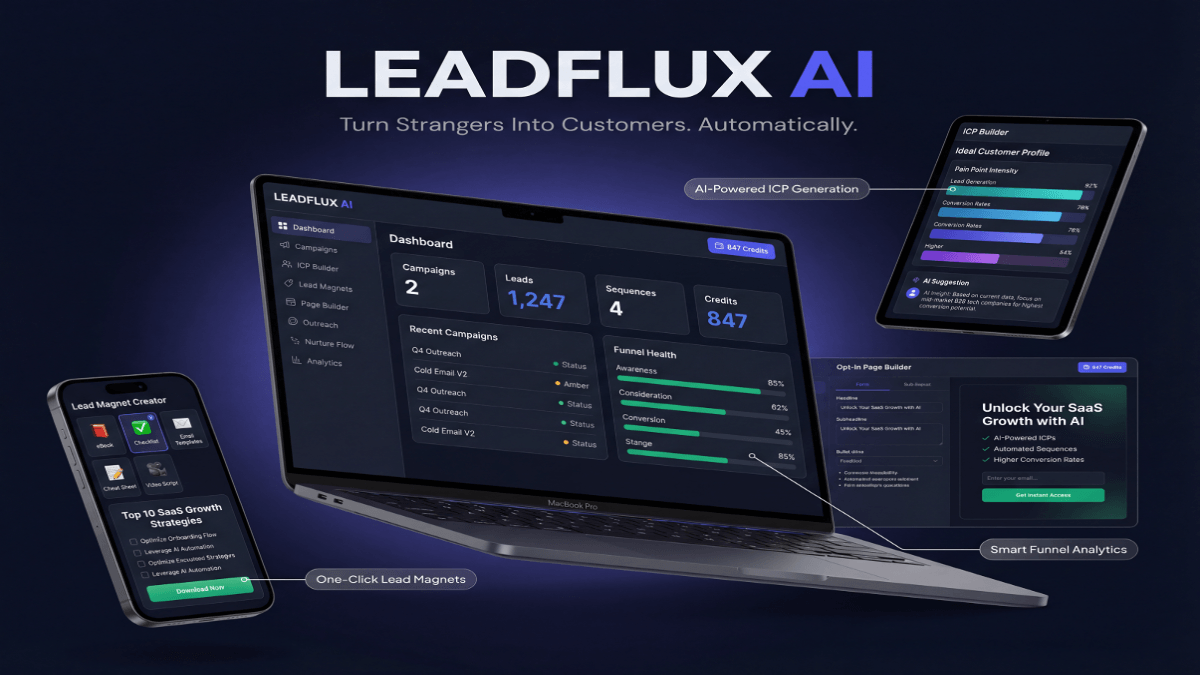
Stop Guessing. Start Converting.
LeadFlux AI Does the Heavy Lifting.
Tracking KPIs is only half the battle — you need a system that turns data into revenue. LeadFlux AI automatically identifies your highest-value prospects, scores leads in real time, and delivers conversion-ready pipelines so you can focus on closing deals, not chasing dead ends.
See How LeadFlux AI WorksEmail Marketing and CRM for Long-Term Lead Nurturing
Not every website visitor or inquiry is ready to buy immediately. Some homeowners are researching for a future project, comparing options, or waiting for the right time. Email marketing and customer relationship management systems help you stay connected with these leads until they’re ready to move forward, and they help you generate repeat business from existing customers.
Capture email addresses by offering valuable resources—seasonal maintenance checklists, troubleshooting guides, or special offers for first-time customers. Create a simple email sequence that provides helpful tips while reminding subscribers of your expertise. For example, an HVAC company might send monthly emails about filter changes, efficiency tips, and seasonal tune-up reminders.
Segment your email list based on customer status and interests. Past customers receive different messages than prospects who haven’t hired you yet. Someone who requested information about bathroom remodeling doesn’t need emails about lawn care. Segmentation dramatically improves open rates and conversion because messages feel relevant rather than generic spam.
Use a CRM system to track every lead and customer interaction. When someone calls, your CRM should log it. When you send a quote, track it. When a customer hasn’t used your services in a year, the system should flag them for a check-in call. This systematic approach ensures no lead falls through cracks and that you maximize lifetime customer value through regular touchpoints and service reminders.
Seasonal campaigns generate massive value for home services businesses. Send furnace tune-up reminders in October, AC check emails in March, gutter cleaning promotions in November. Homeowners appreciate the helpful reminders, and you fill your calendar during traditionally slower periods. Automated seasonal sequences run on autopilot once set up, delivering consistent leads throughout the year.
Tracking, Measuring, and Optimizing Your Lead Generation System
The businesses that dominate home services lead generation share one characteristic—they obsessively track what’s working. You cannot optimize what you don’t measure. Implementing proper tracking and analytics transforms your marketing from guesswork into a predictable, scalable system that you can confidently invest in because you know the exact return.
Track leads by source using call tracking numbers. Assign unique phone numbers to different marketing channels—one for your website, another for Google Ads, another for Facebook—so you know exactly which activities generate calls. Modern call tracking platforms record conversations, transcribe them, and even use AI to identify which calls resulted in booked appointments versus tire-kickers.
Calculate your cost per lead and cost per acquisition for each marketing channel. If Google Local Services Ads cost $50 per lead and convert 40% into jobs averaging $500 profit, that’s a 2.5X return on investment. If Facebook ads cost $20 per lead but only convert at 10%, they’re actually more expensive